

WIKA 232.25 Pressure Gauge
High accuracy pressure gauge with hinged ring for access to pointer.
- Pressure ranges from vacuum to 20,000 psi
- 4 1/2 or 6in (115 or 160 mm) dials available
- Accuracy: ±0.5% of span (ASME B40.100 Grade 2A); ±1.0% of span for 20,000 psi range=

WIKA 232.34 and 233.34 Pressure Gauges
4.5 or 6 inch pressure gauges with thermoplastic housing for use in adverse service conditions where pulsating or vibration exists.
- Pressure ranges from vacuum to 20,000 psi (or equivalent)
- 4.5 & 6in (115 & 160mm) sizes

WIKA 232.54 and 233.54 Pressure Gauges
Industrial, stainless steel, bourdon tube pressure gauges.
- All stainless steel construction
- Designed to ASME B40.100 & EN 837-1 standards
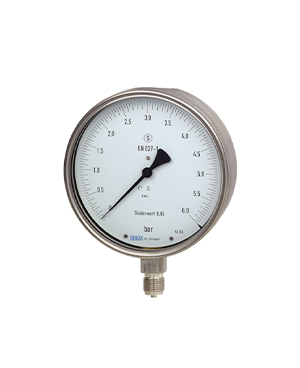
WIKA 332.30 Pressure Gauge
High accuracy test gauge offers ±0.25% accuracy on pressures up to 10,000 psi.
- Pressure ranges from vacuum to 10,000 psi
- 6in (160 mm) dial size
- Accuracy: ±0.25% of span (ASME B40.1 Grade 3A)
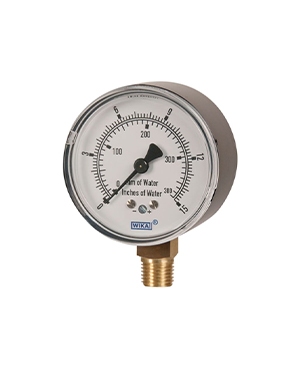
WIKA 611.10 Pressure Gauge
Low pressure gauge suitable for gases or liquids compatible with copper alloys.
- Pressure ranges from -100 to 200 inH2O (or equivalent)
- 2-1/2” (63 mm) dial size
- Accuracy: ±1.5% of span (±2.5% for 10 inH2O range)

WIKA 612.34 and 632.34 Pressure Gauges
Capsule element low pressure gauge suitable for corrosive environments and dry gaseous media.
- Black, fiberglass reinforced thermoplastic case
- Weather resistant NEMA 3 / IP 54 rating
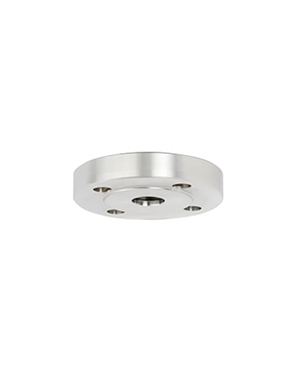
Wika 990.26 Diaphragm Seal
Flange with internal, all welded diaphragm.
- Works with aggressive, highly viscous, crystallizing or hot media
- Pressure range: From 400 mbar [5,8 psi] depending on diameter of diaphragm

WIKA A-10 Pressure Transmitters
General purpose pressure transmitters designed to fit most industrial and OEM applications.
- Pressure ranges from 0 to 15 psi up to 0 to 10,000 psi
- Gauge and absolute pressures available

WIKA CER6000 Reference Resistors
4-wire reference resistors offer high accuracy and stability for voltage and resistance in calibration laboratories.
- Rugged stainless steel construction
- Case Dimensions Ø = 76mm, height 114mm

WIKA CPG Hydraulic Service Kit
Combination of the CPG1500 digital pressure gauge and CPP700 hand pump, can generate up to 10,000 psi (700 bar).
- 0.1% FS accuracy (0.05% FS optional)
- Integrated data logger for up to 50 values per second

WIKA CPG1500 Pressure Gauge
Digital pressure gauge for ranges up to 150,000 psi gauge, intrinsically safe version optional.
- Optional logger function, up to 50 values per second
- IP65 ingress protection

WIKA CPH6200 Pressure Indicator
Single or dual channel handheld pressure indicator for use with CPT6200 pressure sensors.
- Measuring range & accuracy depend on the CPT6200 sensor
- User selectable pressure units
- bar, mbar, psi, Pa, kPa, MPa, mmHg or inHg

WIKA CPH6300 Pressure Indicator
Single or dual channel, IP65 & IP67 hand-held pressure indicator for use with CPT6200 pressure sensors.
- Uses 2 AAA batteries, rechargeable option available
- IP65 & IP67 ingress protection

WIKA CPP1000-H Hydraulic Hand Pump
Test pump for pressure generation up to 1000 bar (14,500 psi).
- Fluid based on mineral oil or single distilled water
- Water-based hydraulic fluids are not suitable
- 200cm³ fluid reservoir
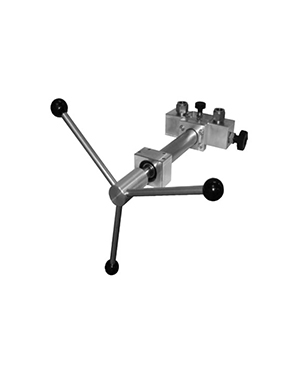
WIKA CPP1000-L Hydraulic Spindle Pump
Hand spindle test pump for pressure generation up to 1000 bar (14,500 psi) with 55cm³ sealed reservoir & fine adjustment valve.
- Fluid based on mineral oil or single distilled water
- Water-based hydraulic fluids are not suitable

WIKA CPP1000-M Hydraulic Spindle Pump
Hand spindle test pump for pressure generation up to 1000 bar (14,500 psi) with 110cm³ reservoir.
- Brass cylinder, SS piston, & aluminum rear flange
- Removable star handle
- EAC approval
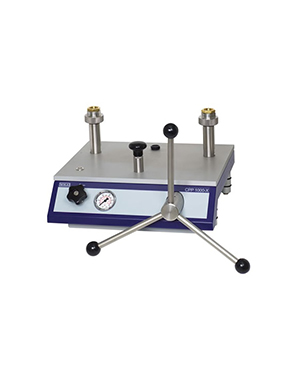
WIKA CPP1000-X Hydraulic Comparison Pump
Stable base comparison test pump for pressures up to 1000 bar (14,500 psi) with 250cm³ reservoir.
- Removable star handle
- 2 freely rotating connectors so instruments can be aligned
- G1/2 female threaded quick-connectors with o-rings
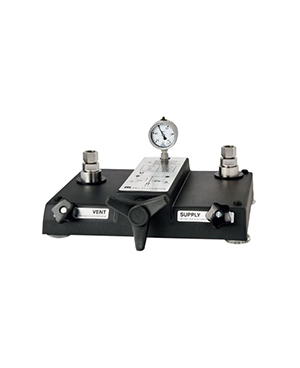
WIKA CPP120-X Comparison Pump
Provides pneumatic pressure to test, adjust and calibrate pressure instruments via comparative measurements.
- Pneumatic provision of pressure on site, in the laboratory or in the workshop up to 120 bar
- For the testing, adjustment and calibration of all types of pressure measuring instruments

WIKA CPP1200-X Comparison Pump
Hydraulic comparison test pump generates pressure to 1200 bar.
- Simple hydraulic test pressure generation for calibrations either on-site, in the laboratory or in the workshop
- For the testing, adjustment and calibration of all types of pressure measuring instruments
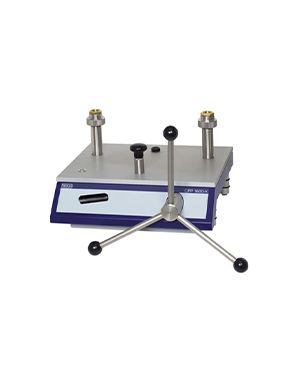
WIKA CPP1600 Hydraulic Pressure Pump
Stable base comparison test pump for hydraulic pressure generation up to 23,200 psi.
- 0 to 23,200 psi (0 to 1600 bar) ranges
- Brass cylinder and stainless steel piston
Pressure Sensor
A pressure sensor, also known as a pressure transducer or pressure transmitter, is a device used to measure and monitor the pressure of gases or liquids in a system. It converts the applied pressure into an electrical signal that can be used for various purposes, such as control, monitoring, or data acquisition.
Pressure sensors are widely used in industrial, automotive, aerospace, medical, and consumer applications. They play a crucial role in maintaining the safety, efficiency, and accuracy of many systems.
some key points about pressure sensors:
Working Principle:
Pressure sensors work based on various principles, including strain gauge, capacitive, piezoelectric, and resonant frequency. Each principle has its advantages and is suitable for different applications.
Types of Pressure Sensors:
- Absolute Pressure Sensor: Measures pressure relative to a perfect vacuum.
- Gauge Pressure Sensor: Measures pressure relative to atmospheric pressure.
- Differential Pressure Sensor: Measures the difference in pressure between two points.
- Vacuum Pressure Sensor: Measures pressures below atmospheric pressure.
- Sealed Pressure Sensor: Measures pressure relative to a fixed reference pressure.
Construction:
Pressure sensors consist of a sensing element that deforms under the applied pressure, along with supporting electronics to convert the deformation into an electrical signal. The sensing element can be a diaphragm, a Bourdon tube, or a silicon-based microelectromechanical system (MEMS).
Output Signals:
Pressure sensors provide analog or digital output signals. Analog sensors generate a continuous voltage or current proportional to the pressure, while digital sensors provide discrete values or use communication protocols like I2C or SPI.
Range and Accuracy:
Pressure sensors have a specified measurement range within which they can accurately measure pressure. The accuracy is typically expressed as a percentage of the full-scale range. For example, a sensor with a range of 0-100 psi and an accuracy of ±1% will have an accuracy of ±1 psi.
Environmental Considerations:
Pressure sensors may have specific operating requirements regarding temperature, humidity, and compatibility with the measured media (such as corrosive liquids or gases). It's important to choose a sensor suitable for the intended environment.
Applications:
Industrial: Process control, hydraulic systems, pneumatic systems, HVAC, leak detection.
Automotive: Engine management, tire pressure monitoring, fuel systems.
Medical: Blood pressure monitoring, respiratory devices, infusion pumps.
Aerospace: Altitude measurement, cabin pressure monitoring, flight control systems.
Consumer: Smartphones, wearables, home appliances.
Calibration:
Pressure sensors may require calibration to ensure accurate measurements over time. Calibration involves comparing the sensor's output to a known reference and adjusting it if necessary.